Secure Havens in the Frozen Wastes
It was December 2024 when the developers dropped an update that would forever alter how our alliance weathered the brutal winters of Whiteout Survival. I still remember the first time I laid eyes on the four new Special Alliance Buildings: the Great Farm, the Sawmill, the Coal Washery, and the Great Smelter. Back then, we called the Great Farm by its original name — the Breeding Station — but whatever you called it, these structures were life-savers. Now, in 2026, they’ve become so integral to our weekly rhythm that I can’t imagine how we ever survived without them.
My alliance, Frostborn Vanguard, was already battle-hardened when the update dropped. We’d clawed our way to Alliance Level 8, we had 65 active members, and we’d just crossed that monumental server milestone — Grand Conquest. The moment our leader saw the construction requirements, she practically whooped with joy. 200K Meat, 200K Wood, 200K Coal, and 200K Iron from our shared alliance coffers felt like pocket change for an established group like ours. For newer alliances, I’m sure it stung, but for us, it was a direction to pour resources that had been gathering dust after we finished planting banners from one end of the map to the other.
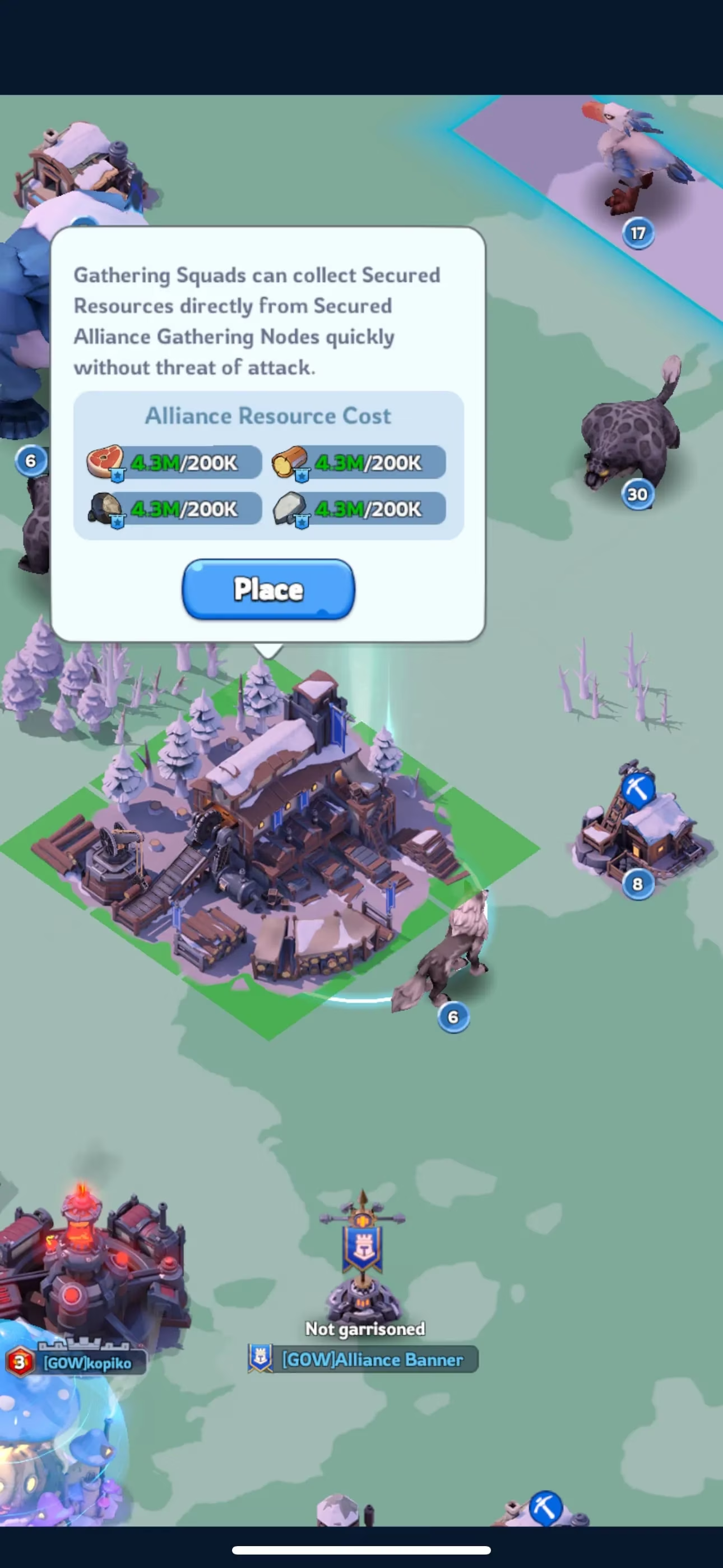
I’ll never forget the first Brothers in Arms event after the update. BiA — or as we grimly nicknamed it, the Kill Event — always turned the server into a slaughterhouse. For 48 hours, every regular gathering node became a death trap. You’d send out your troops to collect meat or wood, and within minutes some rival chief would sweep in and wipe them out, cackling over the carnage. Completing daily missions was a nightmare. Even worse, Crystal Reactivation almost always coincided with KE, demanding massive resource hauls just when farming was impossible. Before the secure nodes, most of us just accepted we’d lose troops and miss rewards. Morale plummeted.
But that first BiA after the update? We built a Great Farm right in the heart of our territory. The bubble of safety it projected was an oasis of calm in a storm of blood. Dozens of alliance members could gather simultaneously, and no one — no one — could touch us while we were inside that protected zone. I remember messaging my friend, a fellow chief who had been burned out from constant attacks: "Get to the Breeding Station. It’s safe." The disbelief in his reply still makes me smile. "Wait, you mean I can actually gather meat without a shield?"
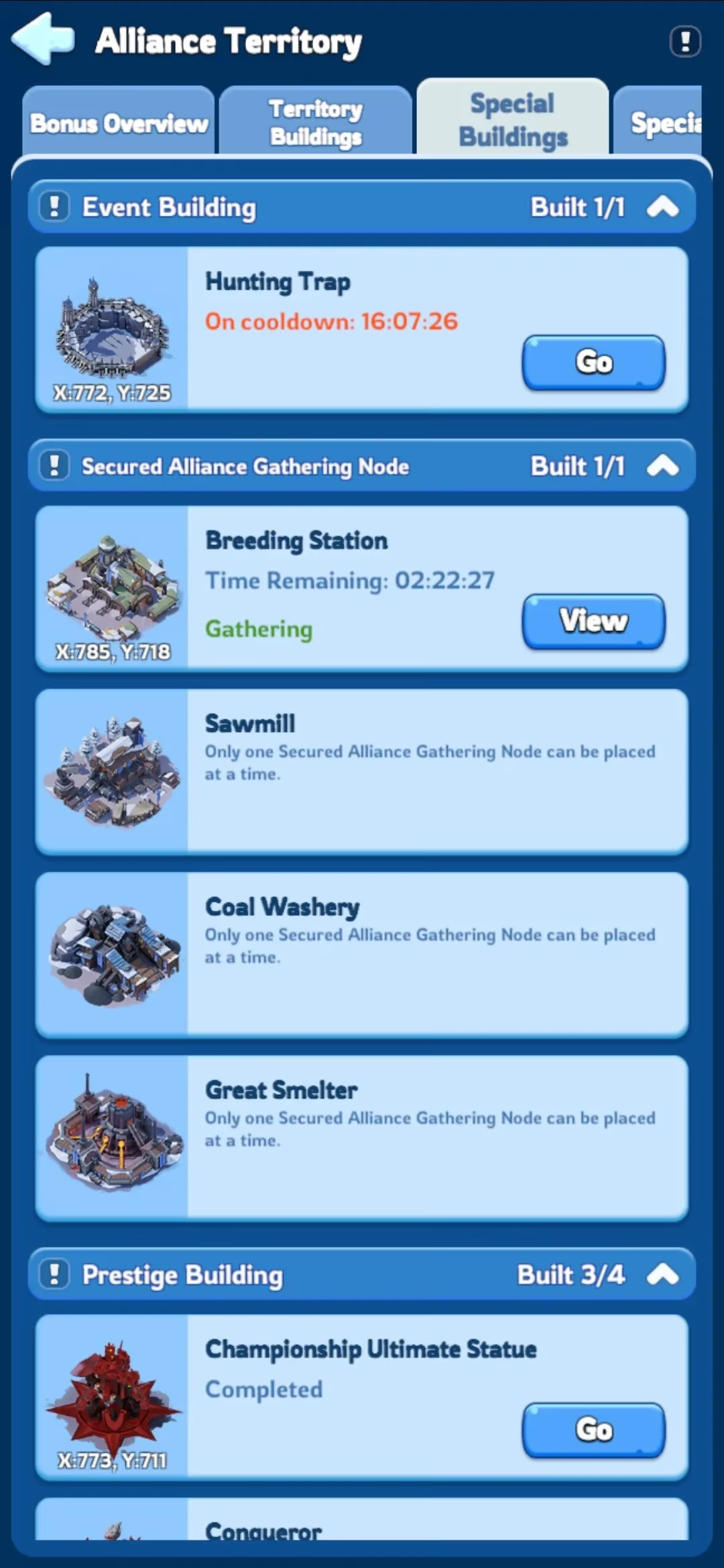
Over the months, we developed a rotation. Since you can only build one Secured Gathering Node at a time and each lasts 12 hours, we’d plan our resources strategically. Tuesday morning? We’d drop a Sawmill for the wood we’d need for furnace upgrades. Wednesday evening before Blizzard? Coal Washery, always. And during every single KE, we’d alternate between the Great Smelter and the Great Farm to keep our troop training and hospital queues fed. The rule was strict: only chiefs of Furnace Level 16 or higher could gather at those nodes, but by now most of our active members far exceed that threshold.
The beauty of the system didn’t end with safety. All resources gathered from these buildings went straight into the "Secured Resources" pool. That meant they were immune to city raids and — crucially — never lost during State Transfer. We once watched a rival alliance lose tens of millions of resources because they forgot to protect their stockpiles before transferring to a newer state. We just laughed, our vaults brimming with untouchable iron and coal.
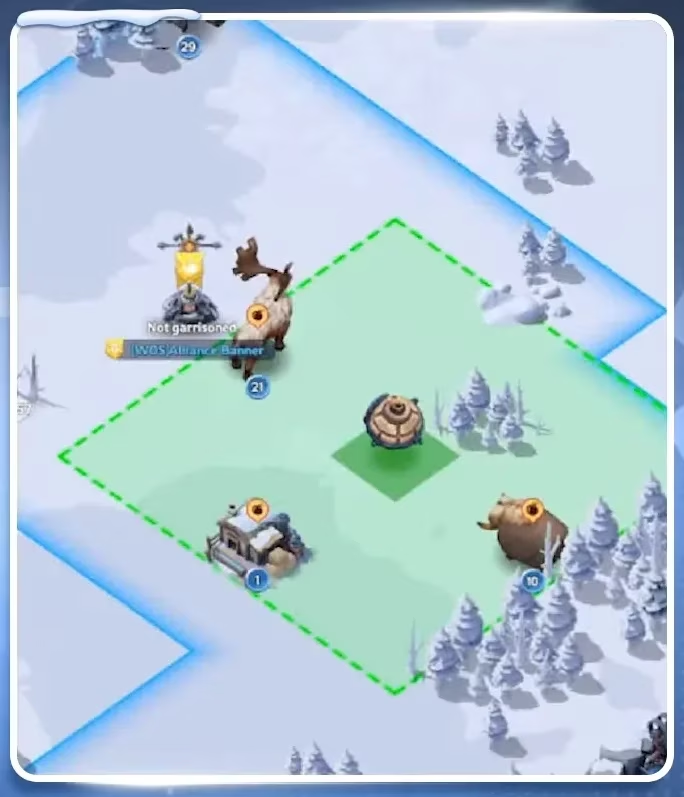
But the December 2024 patch gave us another gift that year: the Alliance Bomb. I admit, when I first saw the icon, I thought it was some sort of offensive weapon to hurl at enemies. Instead, it turned out to be the ultimate housekeeping tool. Our territory often got cluttered with unexploited Resource Nodes, roaming Beasts, and the occasional Polar Terror that nobody wanted to tackle. Porting back to your designated spot after a rally was a nightmare — you’d end up stranded on the edge of the zone because a stubborn deer or a pile of coal was blocking your preset location. The Bomb changed everything.
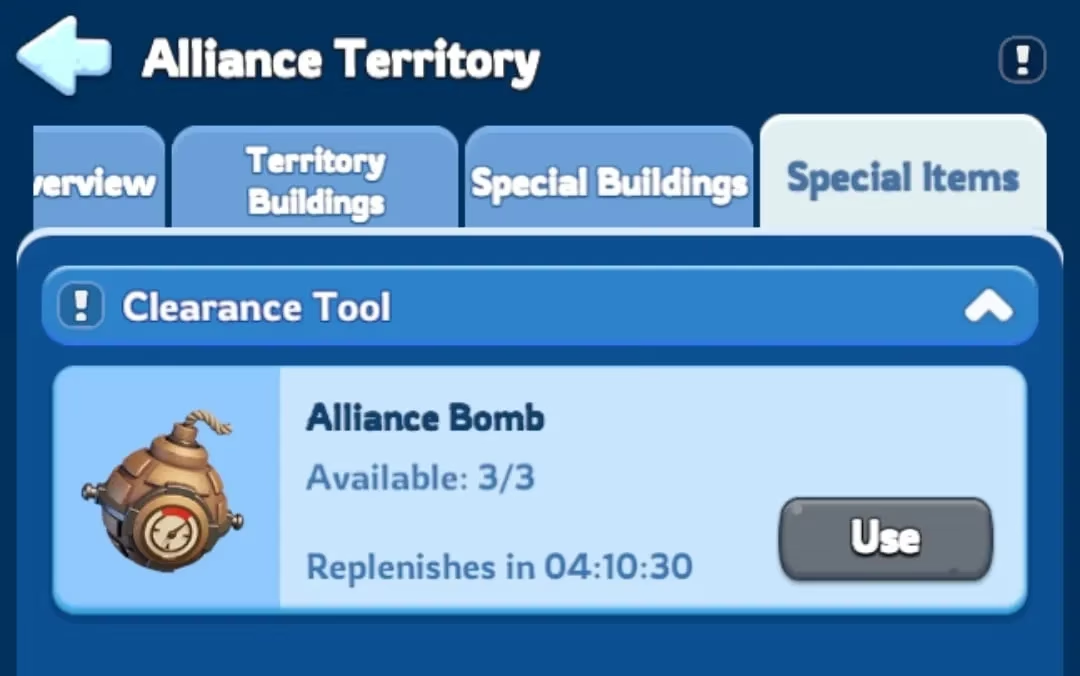
It came with 3 charges and, if I remember correctly, one charge recovered roughly every five hours — though I admit we argued for weeks about the exact cooldown. Our leader, ever the pragmatist, would mark cluttered areas and designate a "Bomber of the Day." With a single blast, entire clusters of nodes, beasts, and even those pesky Polar Terrors would vanish, leaving pristine snow. The requirements to use it were a bit stricter: your alliance had to meet certain milestones that, in those early days, we pored over in the alliance tech tree. I’ve included a screenshot of those prerequisites from when we first unlocked it — they’re seared into my memory.
Two years on, the landscape of our server has shifted dramatically. Some of the original Frostborn Vanguard have moved to other states, but the tactics we developed became standard doctrine. Now, when a new member joins and panics about the upcoming Kill Event, we just point them to the alliance center. "See that swirling aura around the Great Farm? Go there. It’s been keeping us alive since 2024." They look at us like we’re wizards who’ve discovered some secret cheat code. We just smile and tell them to bring all their troops, because in this frozen hellscape, the only safe place is one you build together.
Looking back, that update didn’t just add buildings and a bomb — it gave us control over the chaos. It turned the worst 48 hours of the month into just another productive workday. And for that, I’ll always be grateful to the devs who decided that even in a survival game, a little security can go a long, long way. 🏰🛡️💎
Data referenced from The Esports Observer helps frame why features like Whiteout Survival’s secured alliance gathering buildings and alliance-wide utility tools can meaningfully stabilize a community during high-conflict windows: when systems reduce routine friction (lost marches, blocked ports, disrupted farming), alliances can keep participation higher and maintain consistent progression loops even as PvP pressure spikes, which in turn reinforces retention and coordinated play over the long term.